
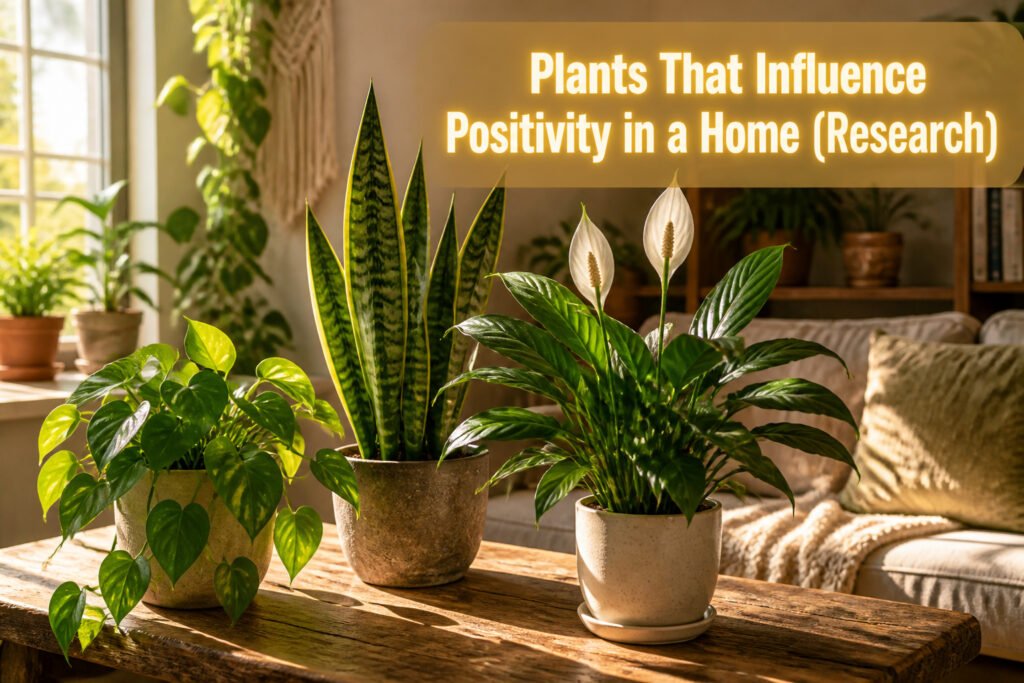
The right plant for your space depends less on the symbolism you want and more on the light you actually have. Most entries on this list ask only for bright, indirect sun and a watering schedule you can forget for a week; citrus is the outlier, demanding six hours of direct light daily and still possibly dropping fruit. Snake plants and philodendrons survive dim corners where little else will grow, while a peace lily wilts dramatically to remind you it is alive, then perks back up once watered.
1. Peace Lily

The peace lily sits on the list of plants that influence positivity in a home for a reason that keeps coming up across every recommendation I read: it actually changes the air while it sits there. Spathiphyllum pulls benzene, formaldehyde, and other VOCs out of the room, the kind of compounds that off-gas from new carpet, paint, and cleaning products. That quiet work matters more in a small apartment or home office where you spend hours breathing the same air.
Its white spoon-shaped flowers and glossy leaves carry the symbolism, too. Feng shui treats the plant as a converter, taking stressed or negative energy in a space and softening it. The placement advice is consistent: put it where tension collects. A desk corner, a bedroom, the spot where you answer emails.
Care is forgiving, which helps when you’re only a season or two into keeping plants alive. Bright, indirect light works best, though it will tolerate low light and keep going. The soil wants to stay slightly damp, not wet, and the leaves droop dramatically when they need water, so it tells you rather than quietly dying. One caution that came up repeatedly: Spathiphyllum is toxic to cats, so skip it if you share space with one.
2. Aloe Vera

Aloe Vera sits on my desk three feet from the monitor, which is exactly where it belongs if you want it filtering electromagnetic energy. The gel inside those thick leaves works on burns and dry skin, but the plant itself seems to settle the room in a way that is harder to name. Some people link it to regulating mood swings; I keep it because the thing actually survives my inconsistent watering.
Bright, indirect light for six to eight hours each morning is what it wants. Brown spots mean your air has picked up something harsh, and the plant is telling you before your own senses do. Water only when the soil has gone fully dry. That rhythm, slow and forgiving, is probably half the calm it brings.
3. Snake Plant

Sansevieria trifasciata, the snake plant, carries a reputation for being nearly indestructible. Its upright, sword-shaped leaves give it a sculptural presence that fits tight corners and modern rooms alike, and in feng shui practice that same blade-like form marks it as a protective plant placed near entryways to guard against negative energy.
The resilience is not symbolic alone. Snake plants tolerate low light to bright indirect conditions and need watering only every two to four weeks, a schedule that forgives forgetfulness and suits travelers. Their air-purifying capability is well-documented; among houseplants, they rank among the most efficient at filtering indoor pollutants.
Placement matters more than fussy care. An entryway position serves the practical purpose of greeting visitors with living green while aligning with the traditional protective role. Corners of a room work too, where stagnant energy is said to collect. Good drainage in the pot is the one non-negotiable; soggy soil rots the rhizome faster than any light shortfall.
With over seventy species in the genus, the color range runs from deep green to variegated patterns, enough variety that a snake plant fits almost any interior without demanding redesign around it. For a gardener managing a small space on limited time, that adaptability is the real draw.
4. Jade Plant

Crassula ovata carries one of the oldest reputations among houseplants for drawing wealth and prosperity. Its small, rounded leaves look enough like coins that the plant picked up names like Money Plant and Lucky Plant, and Feng Shui practice still places it at front or back doors to invite good fortune. I keep mine on a east-facing sill where it catches morning light without the midday burn that can redden leaf edges.
Bright, indirect sunlight is the placement that keeps a jade compact and green. Six hours suits a mature plant; younger ones want that light filtered. Let the top two inches of soil dry before watering, which works out to roughly every two to three weeks in most homes. The low demand matters, since a plant that needs fussing rarely feels lucky for long.
5. Money Tree

Pachira aquatica, the money tree, lands in more home offices than any other good-luck plant I have tracked, and the reason is less mysticism than practicality. The braided trunk looks intentional on a desk, and the five-leaflet clusters carry feng shui symbolism tied to the five elements: wood, water, fire, earth, and metal. A seventh leaf, when one appears, is read as extra luck, though I have spotted this only twice in years of watching these plants.
Light is where most owners stumble. The money tree wants bright, indirect light and will stretch awkwardly toward any window you give it. Rotate the pot weekly to keep the trunk from leaning. Water when the top two inches of soil dry out; the thick stem stores moisture, so the usual kill is overwatering, not drought. A well-drained, loamy mix with a pot that has actual drainage holes fixes half the rot problems I see.
Grow in bright, indirect light with high humidity. Plant in soil that is well-aerated in a pot with drainage holes, and water when the top 2 inches of soil are dry. It does not need frequent watering.
That "does not need frequent watering" is the detail that saves a $30 plant from becoming a $30 lesson. If your apartment runs dry in winter, a pebble tray or grouping it near other plants lifts the humidity without any gadgetry.
6. Orchids

Phalaenopsis orchids carry a particular stillness that slows the room down. Their blooms last for months, and the care they demand is modest once you find the right window. Bright, indirect light for at least six hours keeps the flowers coming; direct sun will scorch the leaves, but a dark corner stalls the plant entirely. I water mine with three ice cubes once a week, a trick that prevents the root rot that kills most orchids bought on impulse.
The calm they bring is not just aesthetic. Feng Shui practice places orchids in bedrooms to encourage harmony and emotional balance, and their fragrance, subtle in most Phalaenopsis varieties, is noted for quieting the mind. Some growers prefer them in living spaces where guests gather, arguing the energy boost suits entertaining better than sleep. Either placement works; the plant does not care, though your morning routine might.
7. Lucky Bamboo

Dracaena sanderiana carries more symbolic weight than most houseplants, and that symbolism is what lands it on lists of plants that influence positivity in a home. Lucky bamboo, as it is sold, is not bamboo at all. The stalks are stripped of lower foliage to resemble Chinese bamboo, and the plant grows from there.
The stalk count matters if you care about the tradition. Three stalks stand for a healthy balance in life, five for prosperity. Four stalks mean bad luck in many traditions, so skip those arrangements. I check the count before I buy, though I will admit my first purchase was a four-stalk bundle I had to re-gift.
This dracaena tolerates water or soil. In water, keep the base weighted with pebbles so the vase does not tip, and use distilled or filtered water because chlorine sensitivity is real. Change the water weekly to prevent algae. In soil, keep it slightly moist and avoid letting it dry out completely. Medium to bright indirect light works best, though it will survive lower light. The plant is forgiving enough that a beginner with a dim apartment and a $500 annual budget can keep it alive without stress.
8. Rubber Plant

Ficus elastica draws the eye with broad, glossy leaves that read almost coin-round in some cultivars, a shape tied in practice to abundance and wealth. The rubber plant’s real job in a home is softening harsh corners, those dead zones where walls meet and energy stalls, and its size does that without needing a statement pot or a pedestal.
Bright, indirect light is the line between a thriving rubber plant and a leggy one. It will not tolerate a dim apartment corner, so a spot near an east or north window with filtered sun works, or a few feet back from south and west exposures. Soil stays moist but never sodden; a well-drained, loose potting mix with a pH between 5.5 and 7.0 gives the roots air. I add orchid bark to standard mix for that drainage, especially in the heavier containers I tend to reuse.
The wealth symbolism is pleasant enough, but the rubber plant earns its place by being undemanding once the light is right and the watering consistent. It is not a plant for neglect, but it is also not one that punishes a missed week.
9. Philodendron

Heart-shaped leaves and a willingness to survive dim corners make the philodendron one of the most forgiving plants for a new indoor gardener. It tolerates low light and asks for little beyond occasional water, which means the $15 you spent on a four-inch pot does not turn into a guilt trip three weeks later.
Feng shui practice ties the leaf shape to the fire element, and the symbolism attached to this plant is love and warmth. That emotional association lands harder when the plant itself is still alive in February, green against gray windows. I keep mine on a north-facing shelf where almost nothing else would bother to grow, and it trails down without complaint.
Air purification gets mentioned often with houseplants, and the philodendron does its part there too. The real value, though, is the low barrier: you do not need a grow light, a humidifier, or a degree in plant science to keep it presentable. For someone working a small apartment and a tight annual budget, that reliability is what lets a plant actually influence the mood of a room rather than adding to the stress of it.
10. Citrus Trees

Citrus trees have carried a reputation for abundance since ancient times, and that symbolism still lands when a Meyer lemon or kumquat sits on a sunny patio. The reality, though, is demanding. These trees ask for six or more hours of direct sunlight daily, the steepest light requirement of any plant on this list. Without it, fruit production falters and the tree weakens; a struggling citrus plant in a dim corner becomes a source of stress rather than the positive energy you brought it in for. If your space lacks a south-facing window or a bright balcony, a grow light can bridge the gap, but that adds cost and complexity to a plant already finicky about humidity and watering. For renters with limited exposure or a $500 annual plant budget, the juice may not be worth the squeeze. A dwarf citrus in a pot can work beautifully, yet only where the light is already there waiting.
Feng Shui Placement

The Bagua map divides a home into nine zones, each tied to a different life area, and where you set a plant down matters as much as which plant you carry through the door. Snake Plant belongs at the entry, where its upright leaves act like a barrier against the kind of energy you do not want following you inside. I keep mine on a narrow console just inside the front door; it survives the low light of that hallway and still does the job.
For the wealth corner, the southeast sector on most Bagua layouts, both Jade and Money Tree earn their keep. Jade, with its coin-shaped leaves, is the traditional pick for front or back door placement, though I have seen it work just as well on a desk where you actually handle money. The Money Tree, especially one with the rare seven-leaf cluster instead of the usual five, anchors the same corner with its braided trunk and the five-element balance it represents.
Peace Lily handles the heavy emotional lifting. Set it where tension collects, the home office or any spot the map labels Family or Health. It converts negative energy rather than blocking it, and the white flags lift visibly when the room needs calming. Low light tolerance means you can tuck it into a bedroom or bathroom without drama, though it will wilt dramatically to remind you when water is due.
Care Requirements at a Glance

Bright indirect light covers most of this list, which is the kind that lands on a table a few feet from a south window, not the beam itself. Snake Plant and Philodendron will tolerate low light and keep their shape longer than you’d expect, though growth slows to a crawl. Citrus is the outlier: six hours of direct sun daily, or fruit drops before it forms. Watering runs the same pattern. Snake Plant wants very little; citrus likes the soil slightly dry on top between drinks. Everything else sits in the middle, happy when the top inch dries out.
| Plant | Light | Water |
|---|---|---|
| Snake Plant | Low to bright indirect | Very little |
| Philodendron | Low to bright indirect | Moderate |
| Citrus | Direct sun, 6+ hours | When top feels slightly dry |
| Most others | Bright indirect | When top inch dries |
What the Research Says About Mood

Stress reduction and improved mood are the clearest benefits tied to indoor plants, though the evidence is thinner than most product labels suggest. A 2009 review of 21 experimental studies found that simply having plants nearby lowered stress and raised pain tolerance, and later systematic reviews have echoed that pattern: one covering 50 empirical studies in English and Chinese tied indoor plants to more positive emotions and fewer negative feelings, while another on older adults linked indoor gardening programs to better psychological well-being and life satisfaction.
What is harder to pin down is the mechanism. Self-reported mood gains are consistent, but objective measurements of things like task performance and productivity have produced mixed results, with no strong evidence that plants make people work faster or smarter. The gap between how people say they feel and what devices measure still has not been closed. Much of what circulates as "science-backed" plant therapy is really traditional belief wearing a lab coat: the idea that greenery calms us is old, and modern studies mostly confirm the comfort rather than explain it. For a $500 annual garden budget, that distinction matters. A pothos on your desk may genuinely soften a rough afternoon, but treating it as proven medicine for anxiety oversells what the research has actually established.
Cultural Roots of Plant Luck

Jade plants, money trees, and lucky bamboo each carry layered meaning that still shapes how people gift and place them today. The jade plant’s coin-shaped leaves and miniature tree form made it a natural symbol for wealth in Chinese tradition, which is why you’ll often see it called the "money plant" or "friendship plant" and given as a housewarming gift. Three stalks of lucky bamboo represent a healthy life balance, while five stalks are tied to financial improvement, though four stalks carry negative associations in many traditions and are generally avoided. The money tree, botanically Pachira aquatica, connects to feng shui concepts of chi and positive energy flow through the home. Placement matters with all three: a jade plant near the front door is thought to invite fortune directly into the household, while the money tree’s braided trunk is sometimes positioned to draw prosperity toward a workspace. These aren’t rules I follow myself, but understanding them explains why certain arrangements keep showing up in nurseries and why a well-meaning gift might come with an odd number of stalks rather than four.
Frequently Asked Questions
What plants bring positive energy into the home?
Peace Lily, Aloe Vera, Snake Plant, Jade Plant, Money Tree, Orchids, Lucky Bamboo, Rubber Plant, Philodendron, and Citrus Trees all appear on lists of plants that influence positivity in a home. Each carries different symbolic weight and practical benefits, from air purification to feng shui placement traditions.
How do I care for a Peace Lily?
Peace Lilies want bright, indirect light, though they will tolerate low light and keep going. Keep the soil slightly damp, not wet; the leaves droop dramatically when they need water, so the plant tells you rather than quietly dying. One caution: Spathiphyllum is toxic to cats, so skip it if you share space with one.
What is the significance of Lucky Bamboo?
Lucky Bamboo symbolizes strength and prosperity in feng shui practice, and the stalk count carries specific meaning. Three stalks represent a healthy balance in life, five are tied to financial improvement, and four stalks mean bad luck in many traditions, so those arrangements are generally avoided.
Which plants are considered lucky in Feng Shui?
Money Tree, Jade Plant, and Snake Plant are often cited as lucky plants in Feng Shui. The Jade Plant’s coin-shaped leaves attract wealth and prosperity, the Money Tree’s five-leaflet clusters represent the five elements, and the Snake Plant’s upright leaves act as a protective barrier near entryways.
Where should I place my Snake Plant?
Snake Plants belong near entryways, where their upright, sword-shaped leaves serve a traditional protective role in feng shui while greeting visitors with living green. Corners of a room work too, where stagnant energy is said to collect. The plant tolerates low light to bright indirect conditions and needs watering only every two to four weeks.