
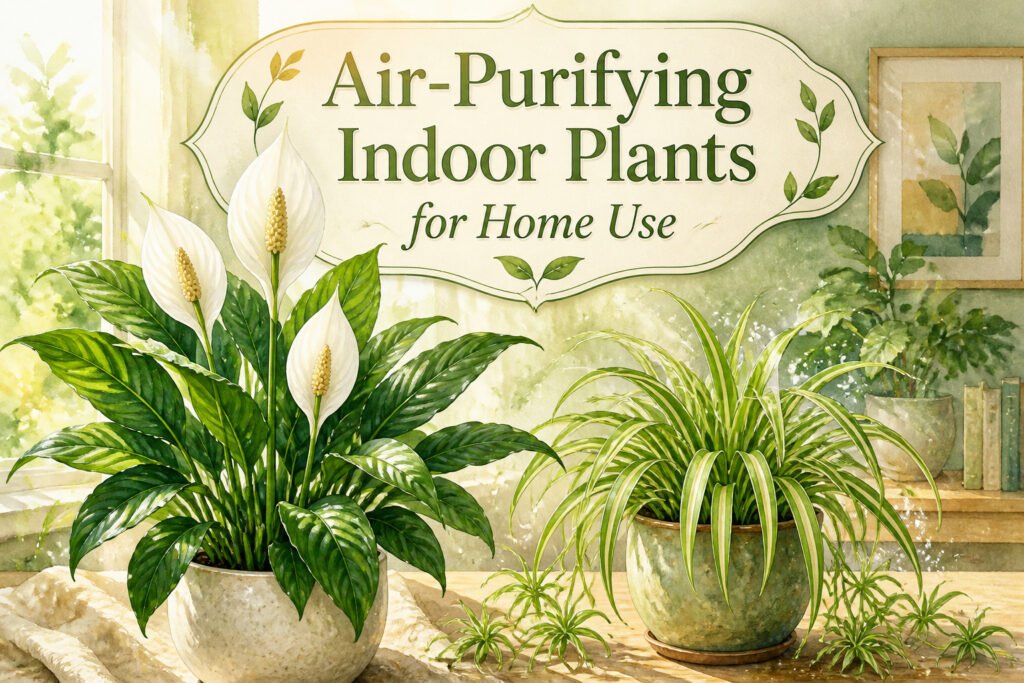
The peace lily is the plant to start with if you want one proven filter for three common pollutants: benzene, formaldehyde, and ammonia. It droops dramatically when thirsty, then perks within hours, which makes the care obvious until you overcorrect and rot the roots. Keep it away from pets; the ASPCA lists it as toxic to cats and dogs. If animals roam your rooms, the spider plant filters formaldehyde and carbon monoxide without the risk, and one plant in a 200 square foot room acts as a working air filter in spaces with limited ventilation.
1. Peace Lily

Spathiphyllum, the plant most of us call peace lily, showed up in the 1989 NASA study as a workhorse against three common indoor pollutants: benzene, formaldehyde, and ammonia. That trio turns up in pressed-wood furniture, adhesives, and household cleaners, so the plant earns its spot in rooms where those sources cluster.
Low to medium indirect light keeps a peace lily growing without bleaching the leaves. Watering once the top inch of soil dries works in most homes, though the plant makes the timing obvious: leaves droop dramatically when the roots need moisture, then perk within hours of a drink. I have killed one by overcorrecting, pouring again before the soil had actually dried, and rot set in faster than the droop had warned me.
Keep this one away from cats and dogs. The ASPCA lists Spathiphyllum as toxic to pets, with calcium oxalate crystals that irritate mouths and digestive tracts on contact. A hanging pot or a high shelf solves it if animals roam the same rooms.
2. Spider Plant

Chlorophytum comosum landed on NASA’s 1989 list for pulling formaldehyde and carbon monoxide out of sealed chambers, and that resilience carries straight into real homes. The arching green-and-white leaves handle the off-gassing from synthetic carpets, pressed furniture, and any room with a stove or fireplace where carbon monoxide lingers. One spider plant in a 200 square foot room is enough to act as a working air filter, though in a ventilated space the effect stays modest; grow it for the steady humidity and the living green, and let a mechanical filter handle the heavy particle load.
The plantlets, or spiderettes, dangle from runners like tiny copies on a string. Bright indirect light pushes out more of them, both for looks and for propagation. Snip a spiderette once it shows roots, set it in water or moist soil, and it establishes within weeks with almost no attention. Semi-shady spots work too, though growth slows.
Cats and dogs can nose the leaves without trouble; the ASPCA lists spider plant as non-toxic, one of only four common air-purifying houseplants that earns that distinction. Keep the soil lightly moist and the thick white roots do the rest, storing backup water and nutrients through the dry spells you will forget.
3. Snake Plant

Sansevieria trifasciata pulls formaldehyde and nitrogen oxides out of indoor air, and unlike most plants, it releases oxygen at night. That makes it one of the few options worth keeping in a bedroom if air quality while you sleep is the goal.
The tradeoff is pet toxicity. The ASPCA lists it as dangerous to both cats and dogs, with saponins that cause vomiting and diarrhea. Bedrooms tend to be where pets sleep, so this is a real conflict to weigh.
I killed my first one with kindness. Water heavily, then let the soil dry completely before the next round. The plant survives low light and punishing drought, but rot from overwatering is the usual way beginners lose it. Growth is slow, so patience matters more than fussing.
4. Aloe Vera

Aloe barbadensis turns up on most lists of air purifier indoor plants for home use because it pulls both formaldehyde and benzene from the air. The same leaf that filters also produces the gel most owners already keep around for burns and scrapes, which makes it one of the more useful plants to actually live with.
The catch is light. This is a sun-loving succulent, not a dim-corner survivor. A bright windowsill with direct sun is what it wants, and without that it stretches, weakens, and stops doing much of anything for your air. I have watched one slowly lean across a sill toward the glass, then sulk through a gray winter until I finally moved it under a grow light. The watering is easy enough: let the soil dry, then dry some more.
One hard limit to know before buying: aloe vera is toxic to cats and dogs. The ASPCA lists it among the plants to avoid if you keep pets, so placement matters as much as light. A high shelf behind glass solves both problems at once.
5. Boston Fern

Nephrolepis exaltata pulls xylene and formaldehyde from the air, which is why it keeps showing up on these lists. The catch is what comes after: this fern wants the humid, indirect-light setup of a Victorian parlor and will crisp to straw in the dry air of a modern heated apartment.
I learned the humidity part the hard way. My first Boston fern sat two feet from a heating vent I had not thought about, and within three weeks the fronds went from arching green to brittle brown at the tips. A pebble tray or a nearby humidifier is not optional here; it is the difference between a plant and a fire hazard. Misting once or twice a week can help, though a small humidifier running nearby is less work and more consistent. Watering needs to stay frequent enough that the soil never dries fully.
The plant is pet-safe, which matters if you are weighing it against something like a snake plant or English ivy. That safety does not make it low-maintenance. For a $500-800 annual garden budget, the cost of the humidifier or the replacement ferns after a dry winter can add up faster than the pot itself.
6. English Ivy

Hedera helix pulls benzene and formaldehyde out of the air, and the vining habit means you can trail it from a high shelf or let it creep across a mantel. Bright, indirect light keeps the leaves dense; too little and the stems stretch into leggy gaps that are hard to fill back in. I have learned to cut stems back to a node when they start reaching, which forces branching lower down. The catch is pet toxicity: English ivy is toxic to cats and dogs, so a hanging basket out of reach or a pet-free room is the only safe placement. Spider mites show up when the air turns dry, so a weekly misting of the leaves helps keep them at bay.
7. Bamboo Palm

Chamaedorea seifrizii filters benzene and formaldehyde from indoor air, the same compounds that off-gas from new carpet, paint, and pressed-wood furniture. That practical chemistry is what landed the bamboo palm on so many clean-air lists, though what convinced me, reading through the recommendations, was the scale it works at: 5 to 12 feet at maturity, with some sources splitting the difference and others pushing the top of that range. Either way, this is a floor plant, not a shelf candidate. The fronds need vertical clearance and outward spread you simply do not have on a bookcase ledge.
Space matters in another way too. A plant this size moves enough air through its leaves to matter in a room, which is the point, but it earns that footprint. Bright, indirect light near a window or glass door keeps it growing; dry air will not kill it, yet the palm clearly prefers humidity and rewards it with fuller foliage.
For households with cats or dogs, the bamboo palm belongs to the small group of air-purifying plants that the ASPCA lists as non-toxic. Spider plant, Boston fern, and areca palm share that distinction; most of the other usual recommendations, including snake plant and peace lily, do not.
8. Dracaena

Dracaena covers enough ground that a single pot can anchor a whole corner of a living room. The several common varieties, marginata, fragrans, and reflexa, all share the same slow growth and tolerance of neglect that makes them workable for gardeners who travel or simply forget watering day. What convinced me, reading through a dozen of these guides, was how consistently the corn plant (Dracaena fragrans) came up as the low-maintenance default: it handles dim light, forgives missed waterings, and still pulls trichloroethylene and xylene from the air. The ‘Massangeana’ cultivar with its yellow stripe can reach six feet, which sounds dramatic until you realize it takes years to get there. Keep this one away from pets: the same compounds that make dracaenas useful air purifiers are toxic to cats and dogs if chewed. That tradeoff is the real decision point here.
9. Rubber Plant

The thick, glossy leaves on a rubber plant do more than look good. Ficus elastica is one of the better formaldehyde removers you can grow indoors, pulling that particular toxin out of the air in spaces where new furniture, carpet glue, or pressed-wood cabinets keep releasing it. Mine grew slowly to about ten feet and tolerated the dim corner by my desk without complaint, though it burned hard the one week I tried it in direct afternoon sun.
The sap is an irritant and will bother skin on contact, so I learned to wear gloves when trimming. Leaf drop is the drama you watch for: move the pot or overwater by even a little, and it sheds leaves like a protest. The ASPCA lists Ficus elastica as toxic to both cats and dogs, causing vomiting if they chew it, so a high shelf is not enough protection if you have a determined climber. I kept mine in a closed room and eventually gave it to a pet-free friend after one too many close calls.
10. Gerbera Daisy

Gerbera jamesonii is one of the few flowering plants that made the air-purifying lists, and that distinction matters more than it might sound. Where most clean-air options give you green leaves and little else, the gerbera daisy produces the oversized, saturated blooms people usually buy at a florist. Those flowers come with a tradeoff: the plant is less forgiving than the foliage-heavy alternatives on this list.
In NASA’s testing, gerberas filtered benzene and trichloroethylene from the air. The real appeal, though, is the repeat blooming. Given bright light and moderate temperatures, a healthy plant will send up new flower stalks across multiple cycles. Too much direct sun scorches the leaves, and anything above 70°F stresses it. Water deeply when the top inch of soil dries, keep the foliage dry to avoid rot, and cut back in winter without letting the roots desiccate completely. Monthly liquid fertilizer during the growing season, or slow-release feed two to three times, keeps the energy up for another round of flowers.
I have not grown this one indoors long enough to claim expertise. What the care guides make clear is that the gerbera demands more precision than a snake plant or pothos. For a household gardener working a small space, the question is whether the color is worth the vigilance. It is not pet-safe, either, which settles the matter in some homes.
11. Philodendron

Philodendron belongs in most lists of air purifier indoor plants for home because it actually takes formaldehyde out of the air. That matters for anyone with particle board furniture, new cabinets, or carpet glue still off-gassing in a small apartment. The plant handles moderate light and irregular watering better than it should, which is why so many beginners end up with one whether they planned to or not.
The genus splits into two habits worth choosing between. Vining types like heart-leaf philodendron trail from shelves or climb a moss pole, while self-heading types such as selloum and elephant ear grow upright and wide, filling floor space. Both filter formaldehyde, so the choice is really about your room, not the chemistry.
Propagation is where this plant earns its reputation. Cut a stem just below a node, root it in water or straight into damp potting mix, and within a couple of weeks you have another plant. That ease makes it the first one many people successfully multiply, and the first they give away.
The ASPCA lists philodendron as toxic to cats and dogs, so keep it on a high shelf or in a room pets do not enter. The same calcium oxalate crystals that protect the plant in the wild cause oral irritation and vomiting in animals, and symptoms show up fast enough that a vet visit is worth it.
12. Chrysanthemum

Chrysanthemum morifolium sits at the top of NASA’s list for stripping general VOCs from indoor air, ammonia and benzene included. The plant outperforms every other species in the study, yet most people treat it as a disposable blooming plant rather than a permanent houseplant. Garden centers stack them by the door in October, you enjoy the six-to-eight-week flush of color, then toss the pot once the petals brown.
That cycle wastes the very quality that brought it here. The plant is a perennial; given bright light and soil kept damp with twice-weekly watering, it will form new shoots and flower again in spring or fall. Monthly fertilizer through the growing season keeps the foliage dense enough to keep filtering.
The catch is pet toxicity. Chrysanthemums are poisonous to dogs and cats, so this one belongs on a high shelf or in a room the animals do not enter. If you are sensitive to daisies, sunflowers, or ragweed, the blooms may also irritate your allergies. For a household with neither issue, the mum offers the rare combination of proven air-cleaning power and flowers you actually want to look at.
13. Kentia Palm and Lady Palm

Most palms marketed as air purifiers lean on the Areca’s fame, but two slower, pricier cousins do the work with less fuss and no risk to pets. The Kentia palm, Howea forsteriana, comes from the subtropics and handles semi-shaded corners where faster palms would sulk. Left there with occasional water, it lives decades, filters pollutants, and puts out more oxygen than most houseplants its size. The catch is growth so slow you will wait years for height, and the upfront cost reflects that patience: a mature specimen runs several times the price of a parlor palm.
The Lady palm, Rhapis excelsa, tops out around six feet indoors and tolerates the same low light, plus swings in temperature and moisture that would stress pickier plants. It wants moist soil with drainage, and only half the fertilizer you would give a pothos. Like the Kentia, it is pet-safe, so cat owners need not rearrange room layouts for safety. Neither palm will transform a room overnight, but both add steady humidity and filtration where a machine would hum.
What the NASA Study Actually Measured

The 1989 NASA Clean Air Study placed twelve common houseplants in sealed chambers, pumped in formaldehyde, benzene, and trichloroethylene, and measured what remained after twenty-four hours. Removal rates ran from 10% to 70%, with some species hitting that eye-catching 87% figure for certain chemicals. The purpose was life support for space stations, not your living room.
That chamber is the whole story. It has almost no air exchange; a typical home replaces its full air volume every one to three hours through open windows, HVAC systems, and drafty doors. In the lab the plant was the only thing working. In your bedroom it competes with ventilation, and loses badly.
What convinced me, reading the actual report, was Figure 1: an engineering diagram of a golden pothos sitting on activated carbon with a fan pulling air through it. NASA’s conclusion was to buy a carbon filter with a fan, not a fern. The industry kept the plant and deleted the machine.
One buried detail changes how you see this. NASA tested golden pothos intact, then cut every leaf off and retested the same pot. Intact plants removed 67.2% of benzene; bare-root soil and bacteria still removed 64.6%. The air-purifying work was mostly happening in the dirt.
Plants Versus Air Purifiers

A HEPA filter pulls 99.97% of airborne particles, dust, pollen, mold spores, pet dander, straight out of the air in minutes. Activated carbon grabs odors and some VOCs just as fast. Plants do not touch particulates at all, and the VOCs they absorb through leaves and root-zone microbes move slowly, continuously, and on a small scale. In 2019, Drexel researchers reviewed 196 experiments across 12 studies and found that normal air exchange in a home dilutes VOCs faster than plants can remove them. The American Lung Association puts the requirement at 10 to 1,000 plants per square meter, roughly 680 plants for a 1,500 square foot home, to match what ventilation and a MERV 13 filter already handle.
The CO2 question comes up often. Plants absorb it, yes, but not in amounts that matter in a room you actually live in. You and anyone else breathing in that space outpace them easily.
So the choice is not either-or. An air purifier handles the measurable load fast. Plants raise local humidity, make a room feel better, and keep working at trace chemicals while you sleep. I run both in my office, the purifier on medium during the day, plants on the windowsill doing what they do. The combination works better than either alone because each covers what the other cannot.
Care That Keeps Them Filtering

A plant only pulls from the air what its leaves can process, and that capacity collapses the moment care slips. Overwatering is the fastest way to kill an air purifier indoor plant for home use; soggy roots shut down respiration before the leaves even yellow. I learned this with a rubber plant that went from formaldehyde filter to compost in three weeks because I kept the tray full. The bamboo palm and its relatives on the NASA list want humidity, yes, but bright indirect light and soil that actually dries between drinks. Dust matters just as much. A film on the leaf surface blocks the stomata, those microscopic pores where gas exchange happens, so a dirty plant is basically off duty. Wipe the leaves or give them a lukewarm shower every couple of weeks; it takes five minutes and restores the metabolic rate that makes the whole point of owning these things possible.
"All of these plants can be grown successfully when conditions are right."
The conditions are the work most lists skip. Light, water, humidity, and clean leaves are not bonus steps; they are the mechanism. A dying plant does not clean air, and a dusty one cleans it slowly enough to round to zero.
Which Plants Survive Pet Owners

Of the thirteen plants on the list, only four are genuinely safe around cats and dogs: the Spider Plant, Boston Fern, Kentia Palm, and Lady Palm. The ASPCA lists all four as non-toxic, and in my own experience the spider plant is the one that survives both a chewing puppy and a cat that treats dangling leaves like string toys.
The rest carry a "toxic" label, which sounds worse than it usually is. For most of these plants, ingestion means vomiting, drooling, or mild GI upset, not a lethal emergency. That said, I would not keep a Peace Lily or a Snake Plant on a bedside table where a cat sleeps eight hours a night. The bedroom placement advice for snake plants is worth questioning if your pets roam overnight.
Here is how the full list breaks down:
- Pet-safe: Spider Plant, Boston Fern, Kentia Palm, Lady Palm
- Toxic to pets: Peace Lily, Snake Plant, Aloe Vera, English Ivy, Dracaena, Rubber Plant, Philodendron, Chrysanthemum
My own judgment: a toxic plant on a high shelf in a room the dog never enters is a different risk than the same plant at coffee-table height with a cat that grazes. The ASPCA Animal Poison Control line is (888) 426-4435 if you need it, though in most cases the vet will manage the symptoms and the plant comes off the reachable surface the next morning.
Frequently Asked Questions
Can houseplants reduce carbon dioxide indoors?
They absorb CO2 during photosynthesis, but a typical collection of houseplants removes far less than the amount people generate just by breathing in the same room. Ventilation and an air quality monitor are far more effective for managing CO2 levels.
Are air purifiers better than houseplants?
Air purifiers with HEPA and activated carbon filters remove particles, allergens, smoke, and some VOCs within minutes. Plants work slowly on trace chemicals and do not touch particulates at all. The two work best together: the machine handles the measurable load fast, while plants add humidity and keep working at low levels.
How many houseplants do you need to improve indoor air quality?
The American Lung Association estimates 10 to 1,000 plants per square meter, or roughly 680 plants for a 1,500 square foot home, to match what ventilation and a MERV 13 filter already handle. In practice, a few potted plants in a ventilated room clean the air too slowly to matter.
Which indoor plants are safest for pets?
Of the thirteen plants covered, four are genuinely safe around cats and dogs: the Spider Plant, Boston Fern, Kentia Palm, and Lady Palm. The ASPCA lists all four as non-toxic. The remaining nine, including Peace Lily, Snake Plant, and Philodendron, carry toxic labels that mean vomiting or GI upset if chewed.