
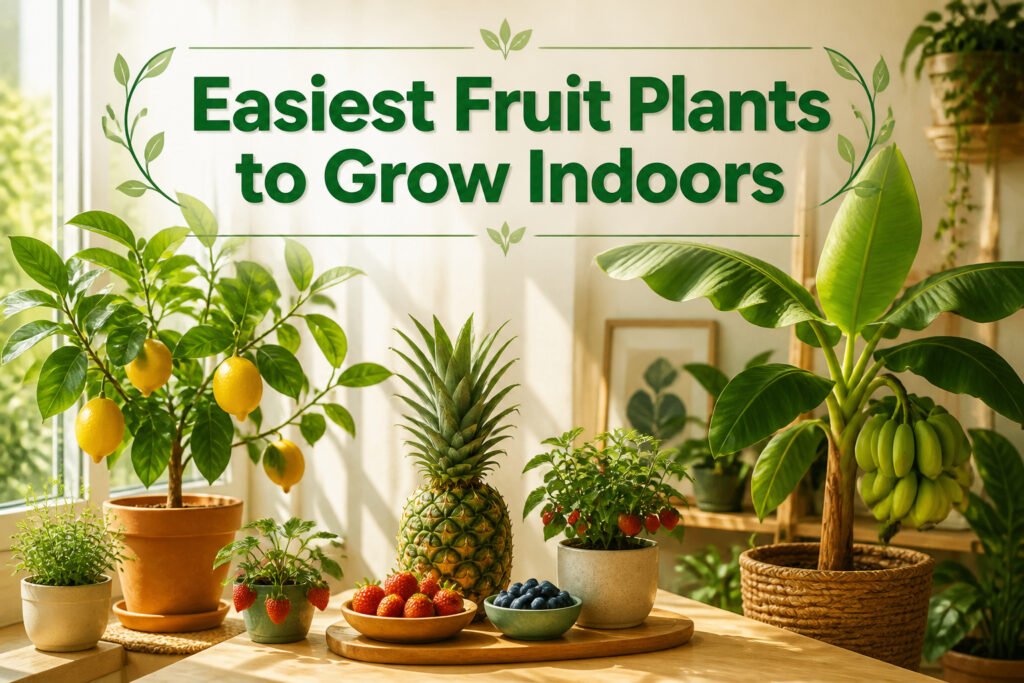
Indoor fruit growing ranges from a windowsill Meyer lemon to a corner-dominating banana, and the single divider is light. Six hours of direct sun is the floor for every plant here, but most homes fall short in winter, which means a grow light on a timer or a plant that stretches, drops leaves, and never fruits. The pineapple crown on your counter is free to start and takes two to three years to reward you.
1. Meyer Lemon

Meyer lemons top most lists of the easiest fruit plants to grow indoors for good reason. The dwarf varieties stay compact enough for a patio or bright kitchen corner, topping out around 3 feet in a container, yet they still push out several flushes of fragrant white blossoms each year and set thin-skinned, sweeter-than-standard lemons that peak in winter and early spring.
"It’s one of the easiest fruiting plants to grow indoors, as long as it gets enough light and humidity… It does best in a cool, sunny location, away from heaters and vents."
The light and humidity part matters more than the variety choice. A south-facing window with 8 hours of direct sun is the starting point; a full-spectrum grow light fills the gap in darker months. For humidity, 50 percent is the rough target, achievable with a small humidifier or regular misting. Hot, dry air from a vent will stress the plant and invite spider mites.
Soil wants to be slightly acidic and well-drained, never soggy. I water when the top inch dries, using lukewarm rather than cold tap water. Hand pollination with a soft brush is the step indoor growers forget: dab each open flower to transfer pollen onto the pistil, since no wind or insects will do it for you. Skip this and you get glorious blooms but no fruit.
2. Strawberries

Strawberries work indoors as hanging plants or in standard pots, though the sources I read disagreed on whether any cultivar is truly better suited for indoor life than another. One writer recommended day-neutral types, another simply said to choose a cultivar suited for indoor environments, and none named specific varieties I could verify. My own read is that light and pollination matter more than the exact cultivar label on the tag.
Six to eight hours of direct sun is the threshold. A south-facing window qualifies in most regions; anything less and the plant stays leafy but the fruit never forms. Well-draining soil keeps the roots from rotting, and the soil should stay moist without ever sitting wet. Overwatering indoors is the fast track to mildew.
The real work is pollination. Without bees or wind, you transfer pollen yourself with a small paintbrush, brushing from the anthers to the stigmas of each open flower. Same flower works; another flower on the same plant works too. The plants reach about 8–12 inches tall and spread 12–24 inches, so a 10-inch pot per plant is the practical minimum if you want fruit rather than foliage.
3. Figs

A fig that actually fruits indoors needs the right variety from the start. Decorative fiddle leaf figs stay leafy and bare, so skip them entirely. ‘Brown Turkey’ handles heavy pruning, pollinates itself, and settles into pot life without complaint. ‘Fignomenal’ stays even smaller at two to three feet, while ‘Celeste’ and ‘Petite Negra’ top out around three to four feet, the workable ceiling for most windowsills.
The pot matters as much as the plant. Drainage holes are non-negotiable; water sitting at the bottom rots roots fast. Use a mix that drains freely rather than bagged garden soil, which stays too wet in a container. Light is the other hard limit. Six to eight hours of direct sun keeps a fig productive, and in most US winters that means a grow light unless you have a south-facing glass door and no overhang. I run mine on a timer through December and January, and the tree pays back with two modest crops a year once it settles in.
4. Bananas

Dwarf Cavendish bananas reach 5 to 8 feet in a container, which means staking a corner near a south-facing window and accepting that this plant becomes furniture. The height is non-negotiable; the reward is smaller bananas that taste like the grocery store version, only the fun of having grown them yourself.
Full sun runs the show here. Six to eight hours daily, ideally through that same south-facing glass, keeps the foliage broad and tropical enough to justify the space it takes. Anything less and the plant sulks rather than fruits.
Watering sits on a narrow ledge. Consistent moisture matters, especially through summer heat, but soggy roots rot fast. I let the top inch dry, then soak until it drains, and I never leave standing water in the saucer. Monthly feeding rounds out the care, with potassium-rich soil giving the plant what it needs to actually set fruit rather than just look pretty.
5. Raspberries

Raspberries in a container stay put, which is the main reason I think of them as one of the easiest fruit plants to grow indoors. In the ground they run, sending runners everywhere and turning into a thicket you did not plan. A pot stops that cold. The tradeoff is light: they want full sun, meaning a south-facing window or a grow light running close to 12 hours, and the soil needs to drain fast or the roots rot.
Not all raspberries take kindly to this life. Full-size canes reach six feet and want support; they sulk in a pot. What you want is a bush raspberry bred for containers, or one of the compact trailing types that top out around three feet and spill rather than climb. ‘Raspberry Shortcake’ and similar dwarf varieties were developed exactly for this, and in my reading they behave better indoors than anything with "heritage" in the name. The berries themselves come in off-season, which is half the point, though the plants are plain-looking at best: thin stems, small leaves, nothing ornamental. The fruit makes up for it.
6. Clementines

Dwarf clementine trees stay manageable at about four to five feet in a container, which is the main reason they make the cut for indoor growing. I keep mine in the sunniest window I have, and the sources I trust all say the same thing: these trees want six to eight hours of direct sun daily and temperatures above 65°F. The soil should drain well, even a little sandy, and stay ever so slightly moist without ever drying out completely. Water with lukewarm water, not cold from the tap.
Humidity matters more than I expected at first. Citrus likes air moisture up around 50 percent, which most heated rooms in winter do not provide. A spray bottle or a nearby humidifier solves this without much trouble. The flowers smell better than any air freshener I have tried, and while the fruit harvest indoors stays modest, the tree earns its spot as a houseplant even in years when it only sets a handful of clementines. Slightly acidic, loam-based soil (roughly equal parts sand and silt, half again as much clay) keeps the roots healthy long-term.
7. Pineapples

A pineapple crown from the grocery store is about the cheapest indoor fruit project there is. Cut the top with roughly an inch of fruit still attached, let it dry for a few days until the cut surface hardens, then plant it in well-draining soil. The drying step matters; wet flesh underground will rot the crown before roots form.
The plant itself looks architectural right away, with stiff, sword-shaped leaves that read as tropical decor even in month six. Fruit is another story. Expect two to three years of growth before anything edible appears, and only if the plant gets direct, bright light and steady warmth. A sunny window in a heated room works; a dim corner does not, no matter how patient you are.
Sources disagree on whether this belongs on an "easy" list. One calls it more demanding than other indoor fruiting plants and warns beginners away. Another says the same care level becomes manageable with a sunroom that stays warm and bright. My read: the pineapple is easy to start and hard to finish. If you want fast payoff, this is the wrong plant. If you want a long-term conversation piece that might eventually fruit, the crown is sitting on your kitchen counter already.
8. Olives

A dwarf olive, ‘Arbequina’ or ‘Koroneiki’, fits a bright corner without eating the whole room. The catch is full sun, six hours minimum, which in most apartments means the sunniest south-facing window you have or a dedicated grow light on a timer. Soil needs to drain fast and sit slightly alkaline to neutral; I mix in extra perlite and a handful of garden lime every spring rather than trust bagged mix alone.
The tree itself is undemanding. It tolerates dry air, forgives dry soil between waterings, and only asks that you ease off the can in winter when growth stalls. What it will not reliably do is fruit. Indoor olives flower, sometimes heavily, but set fruit inconsistently without the temperature swings and wind of outdoor life. A single mature tree in ideal outdoor conditions can push twenty pounds of olives; indoors, a handful is a good year, and many years you get none at all. I keep mine for the silvery-gray foliage and the narrow, Mediterranean look it brings to a room, treating any olive as a bonus.
9. Kaffir Limes

Kaffir limes earn their spot on this list mostly for the aromatic leaves that carry Thai curries and soups, with the bumpy fruit itself as a secondary harvest. The tree needs six to eight hours of direct sun daily, so a south-facing window or a dedicated grow light keeps it from stretching thin and dropping foliage. Warmth alone is not enough; these trees want humidity too, the kind that collects in a sunroom or that you can build under the pot with a pebble tray and water. Well-draining soil is non-negotiable, since wet roots in a container turn to rot faster than in ground. A dwarf variety keeps the size reasonable for a patio or balcony corner, and the leaves start producing enough to harvest within a season or two if the light is honest. I have watched one sulk through a dry winter apartment until a tray of wet stones underneath brought the leaf edges back from crisp brown to green, a small fix for a plant that otherwise asks little.
10. Dwarf Pomegranates

Dwarf pomegranate varieties like ‘Nana’ behave more like a small shrub than a tree, which makes them manageable in a living room corner or on a sunlit kitchen counter. The plant tops out around ten feet in the wild, but pruning keeps it much shorter indoors without much fuss. Full sun and well-drained soil are the non-negotiables; the roots rot fast if the pot stays wet. I water mine when the top inch of soil is dry and let the excess drain completely.
The fruit is small and leathery, more ornamental than something you’d actually eat. The real payoff is the ruffled orange-red blossoms that show up reliably in bright light. For a beginner wanting something that reads as "fruit plant" without demanding orchard conditions, this is about as forgiving as it gets.
11. Mulberries

Dwarf mulberry varieties are what make indoor growing possible at all. A standard mulberry wants to be a 30-foot tree; the Dwarf Everbearing stays small enough for a pot and still fruits. I learned that the hard way after assuming any mulberry could be pruned to size. Fast growth is the problem, not the feature. In a single season, a happy dwarf mulberry can shoot up two feet or more, and indoors that quickly becomes unmanageable. Regular pruning, every few weeks through the growing period, is non-negotiable if you want to keep it at a height you can actually reach.
Six to eight hours of direct sun keeps the growth somewhat controlled and the fruit coming. A south- or west-facing window works; anything less and the tree gets leggy, stretching toward light and creating even more wood to cut back. Well-draining soil matters too, because mulberries hate wet feet but do drink heavily in summer heat. The fruit ripens in waves rather than all at once, which is practical for a home grower. You pick a few berries every few days over weeks, not a single overwhelming harvest that goes bad in the refrigerator.
12. Papayas

Papayas need tropical conditions that most living rooms struggle to provide: six to eight hours of direct sun, steady warmth well above typical indoor temperatures, and humidity that stays high enough to keep the foliage from crisping. The dwarf varieties sold for container growing can reach manageable sizes, but getting one to actually fruit indoors is difficult enough that most growers treat it as a striking foliage plant and consider any papaya as a bonus. I have watched seedlings surge upward under a bright south-facing window only to stall once winter heating dropped the humidity and the soil stayed too cool. Without supplemental grow lights and some way to maintain ambient moisture, the plant drops lower leaves and the stem turns woody and thin. Hand pollination is necessary indoors, since no bees will visit your living room, though the real bottleneck is usually the light and warmth rather than the pollen transfer. If you want to try it, start from seed saved from a grocery papaya; it germinates fast and gives you a tropical-looking trunk within months, just do not count on slicing your own homegrown fruit.
13. Guavas

Strawberry guava is the variety that makes indoor growing feel possible. Psidium cattleianum stays compact in a pot, usually topping out at 4 or 5 feet instead of stretching into a small tree. The red-skinned fruits with that tangy pale flesh start in late summer and can keep coming through winter if the spot is warm enough. Before them, fuzzy white flowers show up with a sweet scent that fills a room without trying too hard. For something tarter, the lucidum type carries yellow skin and a sharper bite, often sold as lemon guava.
Pineapple guava works too, though it asks for more. Feijoa sellowiana needs a cool winter, 40 to 50 degrees at minimum, and at least one other plant nearby for cross-pollination if you want fruit rather than just handsome silver-backed leaves. The payoff is that pineapple-mint-apple flavor in fall, but the window is narrow: a few days after full ripeness, the fruit turns.
Common guava can fruit indoors, but only the true dwarf, Psidium guajava var. nana, belongs in a living room. It wants 60 degrees minimum, humidity, and sun, with white bottlebrush flowers cycling through the year.
What stopped me from ranking guavas higher among the easiest fruit plants to grow indoors is the gap in the care details. Full sun, moderate humidity, and well-draining soil are the basics, yet the specifics of indoor watering rhythm, pest pressure in dry winter air, and whether the compact varieties need root pruning stay scattered or missing. A gardener two seasons in will figure it out, but they will be figuring, not following a path someone already walked.
14. Kumquats

Kumquats belong on any list of easiest fruit plants to grow indoors because the whole fruit is edible, rind and all, and the rind is actually the sweet part. The flesh inside stays tart, which makes for a neat bite-sized snack that needs no peeling.
I would start with Citrus japonica ‘Nagami’, the oval-fruited variety that shows up in grocery stores around the holidays. It is a dwarf type bred for container life, and while it will not reach outdoor tree size, it still sets a fair crop. ‘Meiwa’ is rounder, sweeter, and seed-free at about 1¼ inches across. ‘Fukushu’ runs larger with thin, sweet skin too. Skip ‘Hong Kong’ if you want fruit to eat; the scarlet ¾-inch fruits are mostly for looking at, with big seeds and almost no pulp inside.
These trees need eight hours of direct sun daily, so a south window is the minimum and a grow light is worth adding from fall through early spring. The soil should be slightly acidic and drain well; standard citrus mix from any garden center gets you there. Hand-pollination with a small brush bumps up fruit set indoors, where no bees wander in to do the job. White flowers come in late spring and early summer, often perfuming the room, and the fruits hang on the branches from early winter straight through to spring.
15. Avocados

Growing an avocado from the pit in your kitchen window is a reliable way to get a leafy houseplant, but the decade-long wait for fruit makes it a patience test rather than a practical crop. The pit suspended in water with toothpicks will sprout in up to six weeks, yet that seedling can take 10 years or more to produce any avocado, and the fruit quality is a gamble. For actual indoor harvests, a grafted nursery plant is the better route. Dwarf varieties like ‘Wurtz’ or ‘Little Cado’ are naturally small, fruit sooner in containers, and do not need a second tree for pollination. Either way, the tree demands full sun, so a south-facing window or supplemental grow lights are non-negotiable if you want it to eventually set fruit.
Light Every Fruit Needs

Every fruit on this list needs six to eight hours of direct sun daily to set fruit and keep its leaves. A south-facing window is the closest most indoor gardeners get to that, and it is usually enough from March through September. West-facing glass works in a pinch, though the light tapers off earlier in the day.
The trouble starts in winter, or in rooms that face north or east. Light drops, the plant stretches toward the window, and new growth turns leggy and pale. Leaf drop follows, often on the lower branches first. A supplemental grow light fixes this; I run mine on a timer for the same six to eight hours, hung close enough that the leaves do not reach for it. Without that backup, an apricot or fig in a dim corner will survive for months, then crash all at once when the reserves run out.
Water Without Drowning Them

Consistent moisture keeps indoor fruiting plants alive, but the line between enough and too much is narrower than I expected when I started. Well-draining soil is the only real prevention for root rot, and that starts with the pot itself. Drainage holes are non-negotiable; a layer of sand at the bottom buys extra insurance against wet feet, especially for figs and citrus that will sulk or drop fruit if their roots sit soggy.
The finger test still works better than any gadget I have tried. I push my index finger two inches into the potting mix near the trunk, not at the rim where it dries fastest. If it comes up damp, I wait. Citrus wants soil kept slightly moist and never fully dry, while bananas and tropical fruits need even moisture plus humidity around 50 percent, which I hit with a spray bottle in winter when the heater runs. Water temperature matters too: lukewarm water, not cold straight from the tap, seems to keep citrus roots from checking their growth.
Seasonal shifts change the schedule more than the calendar does. My plants drink slower in short winter days, so I stretch the interval and cut the volume rather than drowning them on habit. Growth in spring picks up, and I respond by returning to the finger test more often, not by doubling the dose.
Pollinating by Hand

Indoor fruit plants sit in a room with no bees, no breeze, and no reason for pollen to travel. The flowers open and wait, and without help they simply drop. That is the wall most new growers hit.
The fix is a soft paintbrush, the kind you would use for watercolor, with bristles flexible enough to brush the anthers without tearing them. I work in mid-morning, when the flowers have opened and the pollen is loose but the day has not warmed enough to dry it out. Touch the brush to the pollen-heavy center of one flower, then stroke that same loaded brush across the stigma of the next. Some plants carry both male and female parts in each bloom; others keep them on separate flowers. Strawberries, one of the easiest fruit plants to grow indoors, offer both stamens and stigma in every open flower, so the same blossom can pollinate itself. The transfer still needs the brush. Move from flower to flower until the bristles look dusty, then wash and dry it before the next round.
A plant that sets fruit indoors has earned its keep through your hand.
Soil and Humidity Basics

Citrus roots rot fast in heavy soil, so I start every indoor fruit tree in a mix that drains like a sieve yet still holds some shape. A 2:2:1 ratio of sand to silt to clay gives that loamy structure citrus prefer, though most bagged mixes need help getting there. I open a standard potting soil and cut it with coarse sand and a little pine bark fines until water runs through in seconds, not minutes. Slightly acidic is the target; most tropical fruits land in that same range, so one mix serves the whole windowsill orchard.
Humidity separates surviving from thriving once the soil is right. Citrus want up to 50 percent humidity, which most heated homes miss by half in winter. A pebble tray under the pot buys a few points, and misting with lukewarm water in the morning helps, though I have to stay consistent or the leaves crisp at the edges. For a cluster of tropical fruits, a small humidifier near the group runs cheaper than replacing a dried-out kaffir lime. Saucers beneath pots catch drainage, but I empty them; standing water breeds fungus gnats and counts against the drainage I just built into the mix.
Dwarf and Container Varieties

Standard fruit trees bred for orchards will outgrow a living room before they ever flower, which is why the easiest fruit plants to grow indoors are grafted dwarfs and named container cultivars. These varieties top out at manageable heights and fruit at a younger age than their full-size relatives.
| Cultivar | Mature Size | What Sets It Apart |
|---|---|---|
| ‘Brown Turkey’ fig | 3–4 ft | Self-pollinating; fruits year-round under grow lights |
| ‘Nagami’ kumquat | n/a | n/a |
| Dwarf Cavendish banana | 5–8 ft | Fruits at container size; monthly feeding keeps it productive |
| ‘Nana’ pomegranate | ~10 ft (prunable) | Shrub habit fits pots better than tree forms |
| ‘Wurtz’ avocado | n/a | n/a |
The dwarf Cavendish is the clear example: supermarket Cavendish bananas hit 20 feet or more, while the dwarf strain stays houseplant-scale and still delivers edible fruit. Figs follow the same pattern. ‘Brown Turkey’ and ‘Fignomenal’ (2–3 ft) both fruit in pots, but a standard fig would need a greenhouse. Grafted citrus like kumquats and the compact ‘Wurtz’ avocado carry their reduced stature in the rootstock, not just the top growth, so the restraint lasts the plant’s whole life. Seed-grown avocados, by contrast, often grow tall and fruitless for a decade before you discover the mismatch.
The named varieties also carry predictable flavors and harvest windows. A generic banana pup or pomegranate seedling might survive indoors, but you are gambling on fruit quality and waiting years to find out whether you won.
Frequently Asked Questions
What fruits can I grow indoors?
You can grow Meyer lemons, strawberries, figs, bananas, raspberries, clementines, pineapples, olives, kaffir limes, dwarf pomegranates, mulberries, papayas, guavas, kumquats, and avocados indoors. Most need dwarf or compact varieties bred for container life, since standard sizes outgrow typical rooms fast.
How much light do indoor fruit plants need?
Six to eight hours of direct sun daily is the threshold for every fruit on this list. A south-facing window covers this from March through September; a grow light on a timer fills the gap in winter or for east- and north-facing rooms.
Do indoor fruit plants need to be pollinated?
Yes, most indoor fruit plants need hand pollination since no bees or wind reach them. A soft paintbrush transfers pollen from anthers to stigmas in mid-morning when flowers are open. Strawberries, lemons, figs, and kumquats all set better fruit with this step.
How often should I water indoor fruit plants?
Water when the top inch of soil dries, checked with a finger two inches near the trunk. Citrus wants slightly moist soil never fully dry; bananas and tropical fruits need steady moisture plus humidity around 50 percent. Cut back in winter when growth slows and days are short.
What type of soil is best for indoor fruit plants?
Well-draining, slightly acidic soil works for most indoor fruits. A 2:2:1 ratio of sand to silt to clay holds shape while draining fast. Extra perlite helps for figs and olives; garden soil alone stays too wet in pots and rots roots.